Bring the project to a hospital
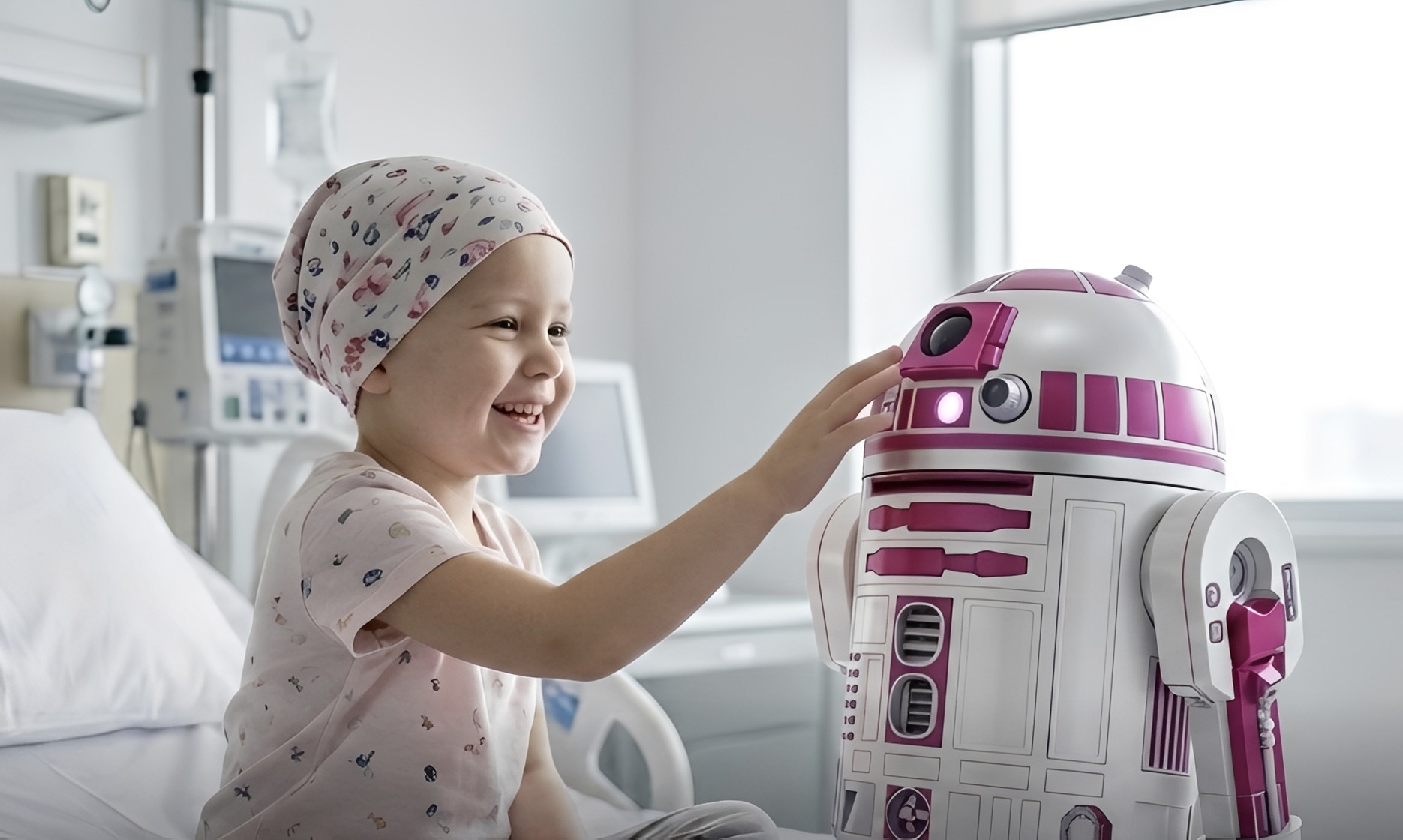
Introduce Mini R2-KT into pediatric oncology or a hospital classroom with support from the Foundation.
Discuss my hospital
Robotics with purpose
We bring hospitals, universities, companies and schools together to create social robotics and STEAM experiences for children during long hospital stays.
Start here
The Factory turns the intention to help into concrete, responsible and measurable projects.
Introduce Mini R2-KT into pediatric oncology or a hospital classroom with support from the Foundation.
Discuss my hospitalTell us what your organisation can contribute and we will design a concrete, measurable partnership.
Start a conversationActivate research, mentoring, robotics, responsible AI or STEAM challenges with genuine social impact.
Explore the model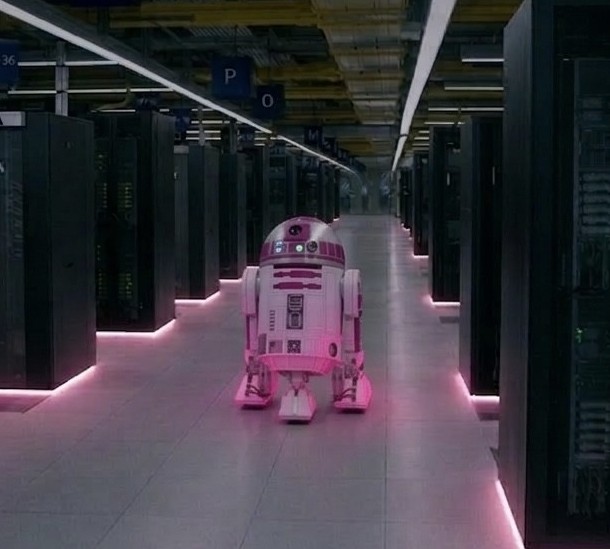
The project
R2-KT began in 2005 when Albin Johnson created a pink droid to support his daughter Katie. Today, The Pink Force Factory turns that gesture into a social innovation ecosystem growing from Spain to the world.
Established in Spain in 2020, Fundación ThePinkForce develops every technological advance with care, shared knowledge and absolute respect for children.
How we workA 20-year legacy
The Factory organises two decades of history and learning to build a new phase from Spain.
Albin Johnson creates the pink droid to support his daughter Katie during her illness.
Fundación ThePinkForce is created to turn Katie's legacy into long-term hospital support.
Experiences in Madrid, Bilbao and Japan inform the redesign and the next phase.
The Factory consolidates agreements and shared work across robotics, health and education.
Subject to partnerships, the goal is to expand the hospital network and connect units through Universe.
R2-KT's value lies in what it represents to children and families. Every technical development is a support tool, never a substitute for human or clinical care.
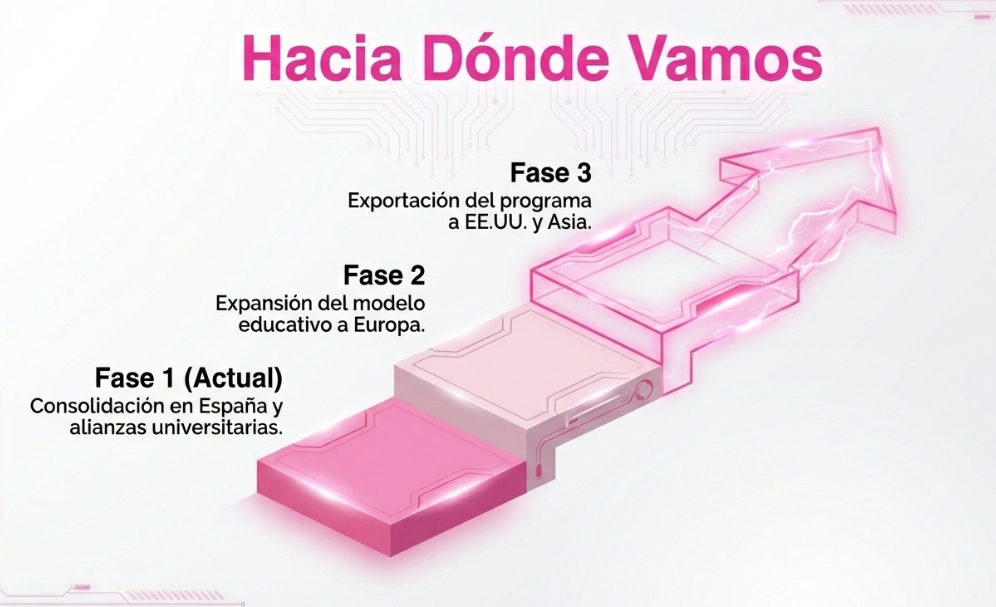
Where we are heading
This roadmap expresses an institutional aspiration. Progress will depend on agreements, funding, evaluation and operational capacity in each territory.
University network, hospital implementation, the Challenge and stronger protocols.
Sharing methodology and lessons with compatible organisations when concrete agreements are in place.
Connecting developments in Spain with the international R2-KT community, including the bridge to Japan.
Mini R2-KT
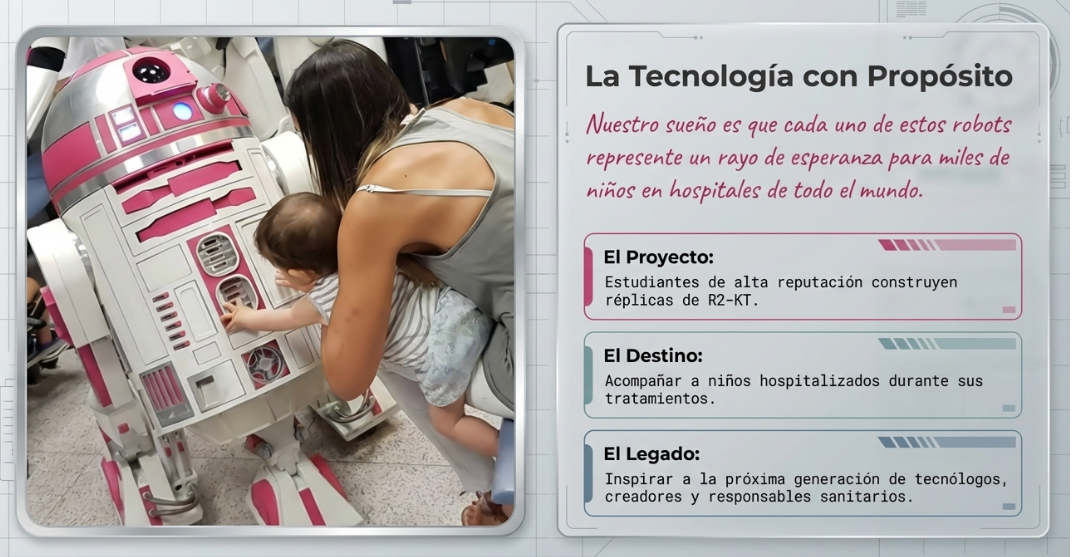
A mobile robot built by educational communities and donated to pediatric oncology units and hospital classrooms.
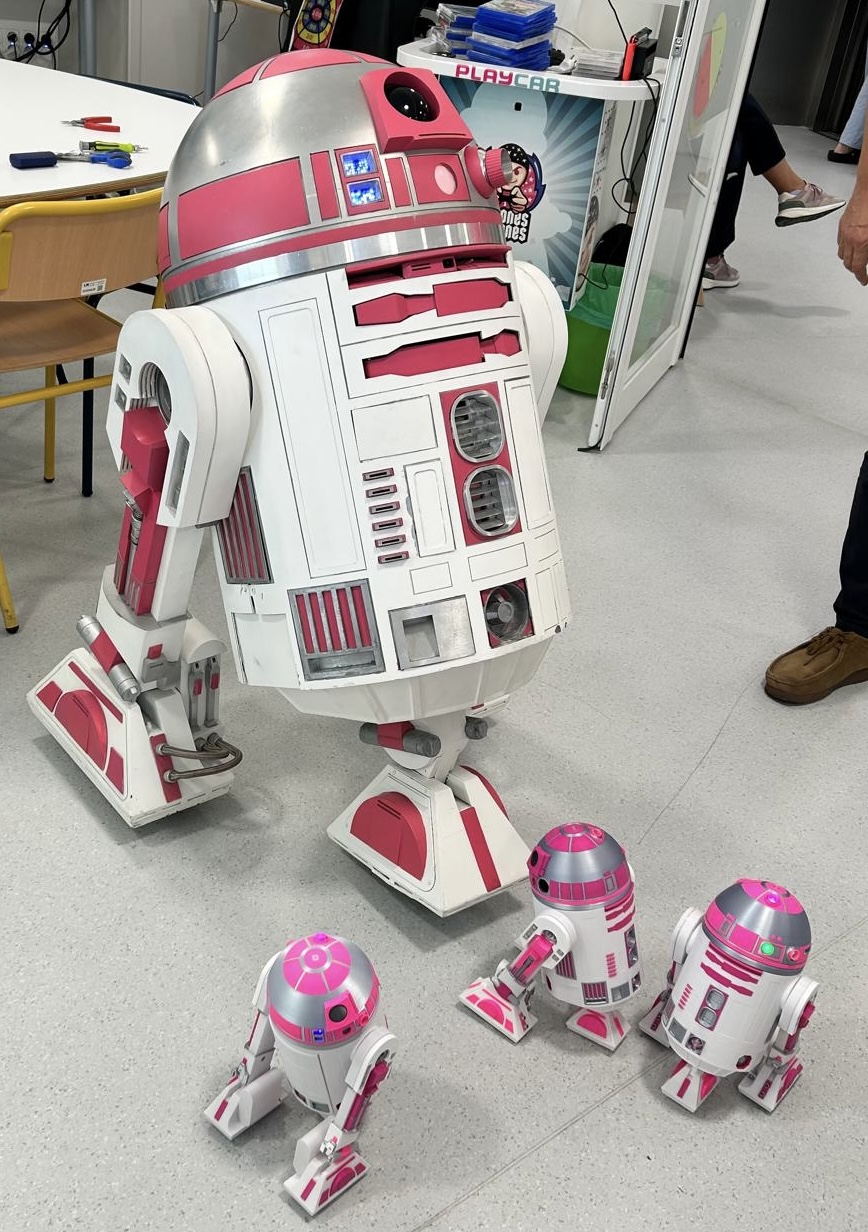 From prototype to an international network
The EHU Bilbao School of Engineering is redesigning 5–10 units with mentored schools, improving durability, connections and motor control.
Five units per hospital, subject to funding, manufacturing and hospital coordination.
Help make it possibleEducational mission
Building Mini R2-KT brings together technical skills, adaptation to pediatric environments and social responsibility. Learning does not end when the robot works: it culminates when the unit can support children safely, empathetically and with purpose.
Design, manufacturing, electronics, programming, integration and technical documentation.
Ethics, empathy, teamwork and responsibility towards a real recipient.
Suitable materials, friendly interaction, accessibility and coordination with the centre.
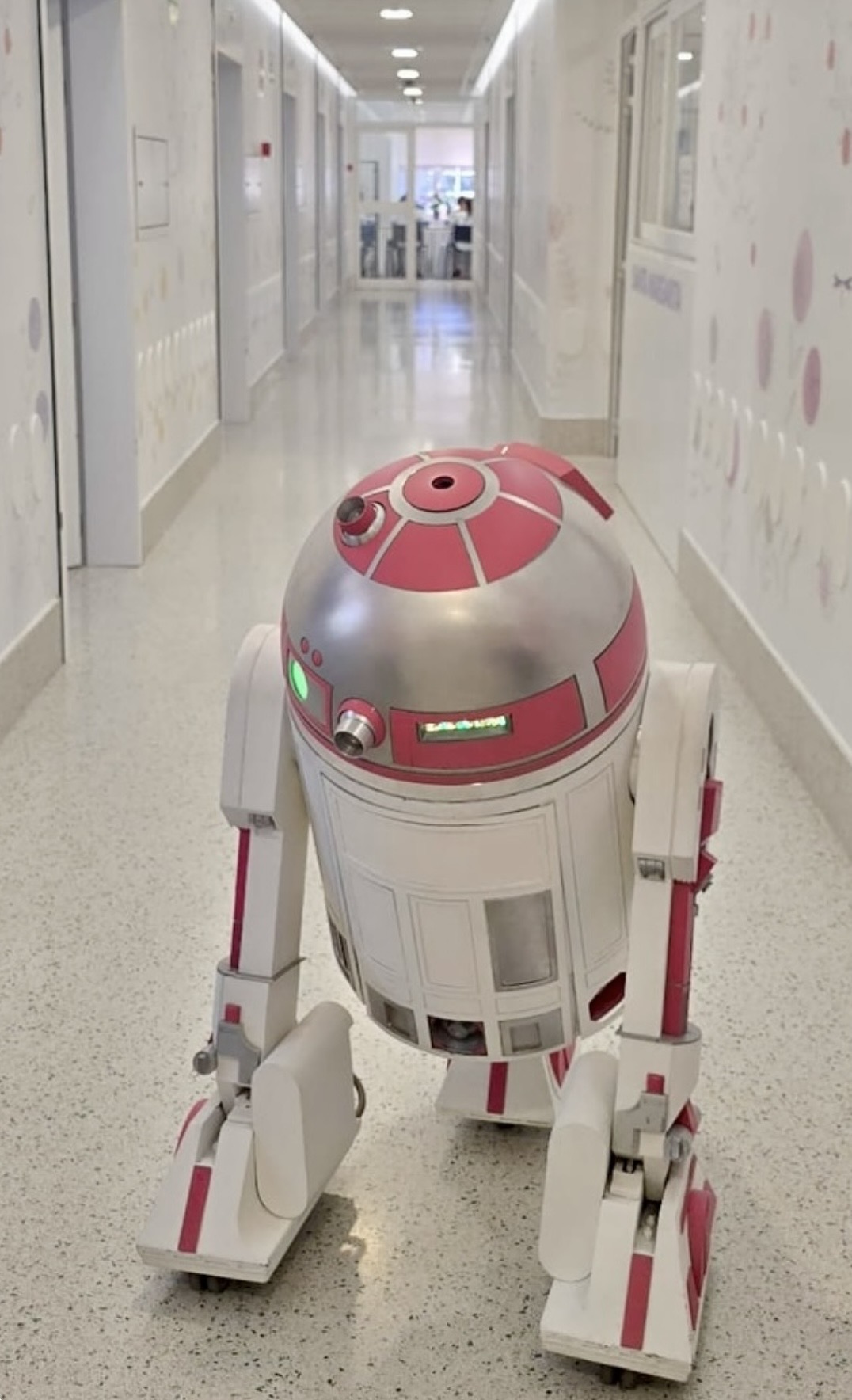
Full-size R2-KT
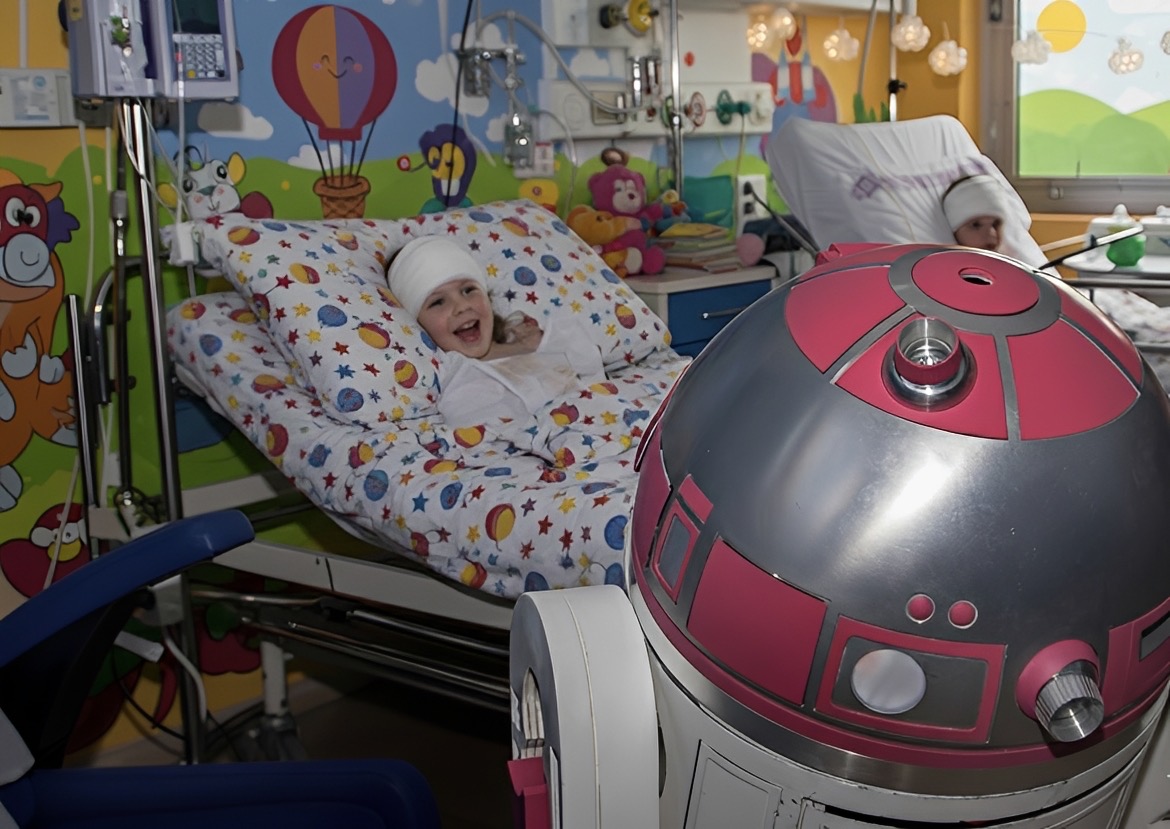
R2-KT hospital visits are the origin of the Foundation's social work. The new phase aims to improve accessibility, interaction and autonomy without turning the robot into a substitute for the people supporting the child.
Remote-controlled movement, lights, sound, cameras, projection and audiovisual resources for visits.
Screens, new gestures, captioning of R2-KT sounds and more accessible communication systems.
Assisted navigation, adaptive responses and emotional recognition without storing images, subject to ethical and healthcare assessment.
Artificial intelligence and emotional-recognition capabilities are research areas; they are not presented as clinical or fully operational functions.
From classroom to hospital
Delivery is only one moment. The project includes preparation, traceability, coordination and learning afterwards.
The Foundation identifies needs with hospital classrooms, associations and authorised professionals.
Universities, schools and companies collaborate on manufacturing, assembly, documentation and testing.
Each Mini R2-KT receives a technical inspection, QR/NFC identity and traceability before delivery.
Delivery is coordinated with the centre; lessons learned inform protocols and future versions.
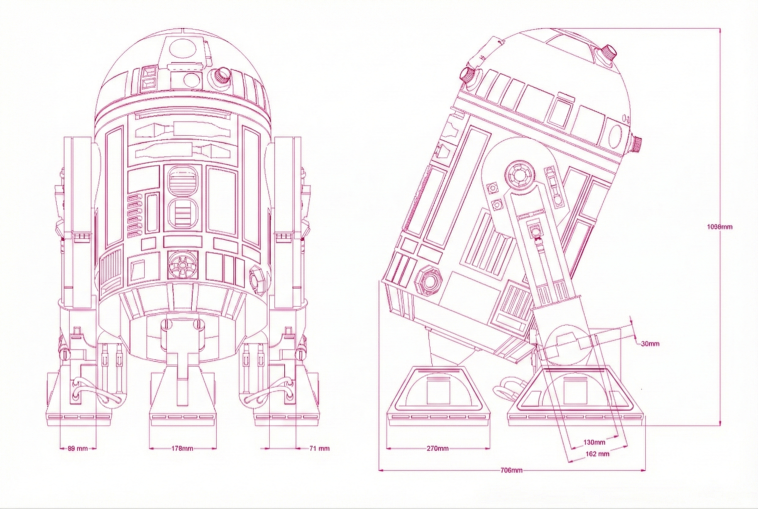
Open yet controlled model
The Foundation provides 3D models, inventories, diagrams and technical knowledge to authorised organisations. Improvements can be documented and transferred across the network, while every unit retains an exclusively social, educational and hospital purpose.
It records which organisation participated, the inspection received, the authorised destination and who coordinates maintenance. QR or NFC also links to the digital experience without identifying the child.
Design, manufacturing, inspection, documentation and mentoring.
3D printing, assembly, electronics and supervised STEAM learning.
Scientific team building, content and skilled volunteering.
Funding, materials, talent, manufacturing and institutional support.
Mini R2-KT Universe
The digital experience linked through NFC or QR turns every Mini R2-KT into a galactic companion without collecting children's personal or clinical data.
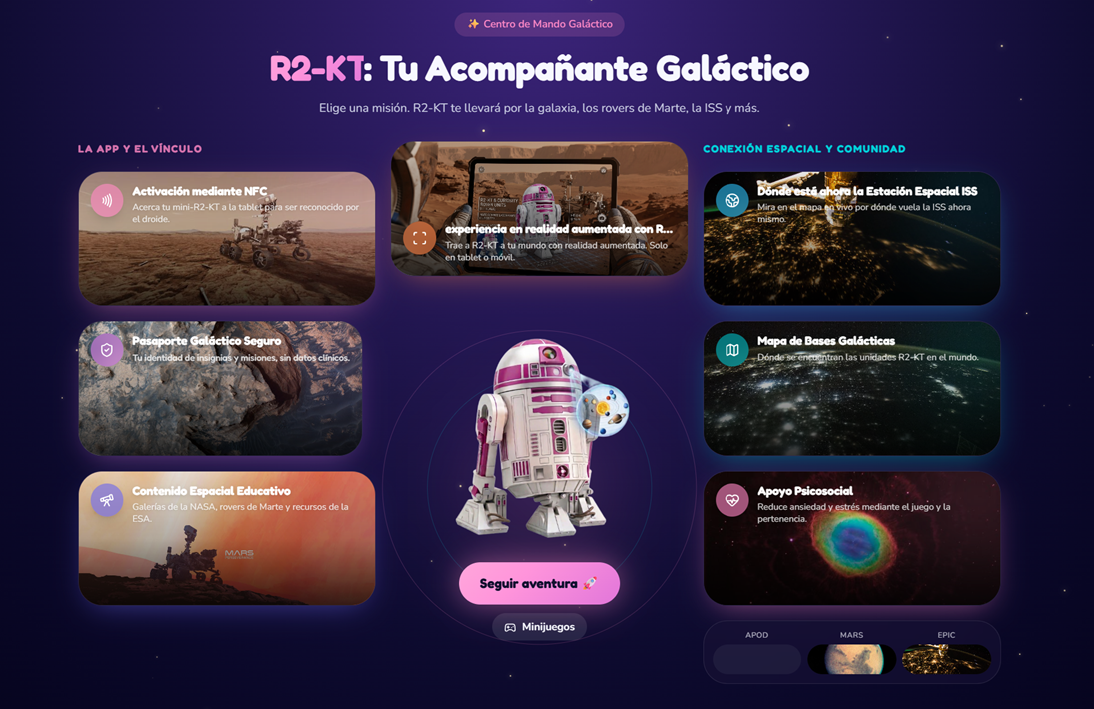
The Moon, Mars, Webb, rovers and the ISS using public NASA and ESA content, without implying official sponsorship.
A global R2-KT map and supervised messaging between units, without identifiable data.
Games and future responsible AI functions subject to ethical, academic and healthcare validation.
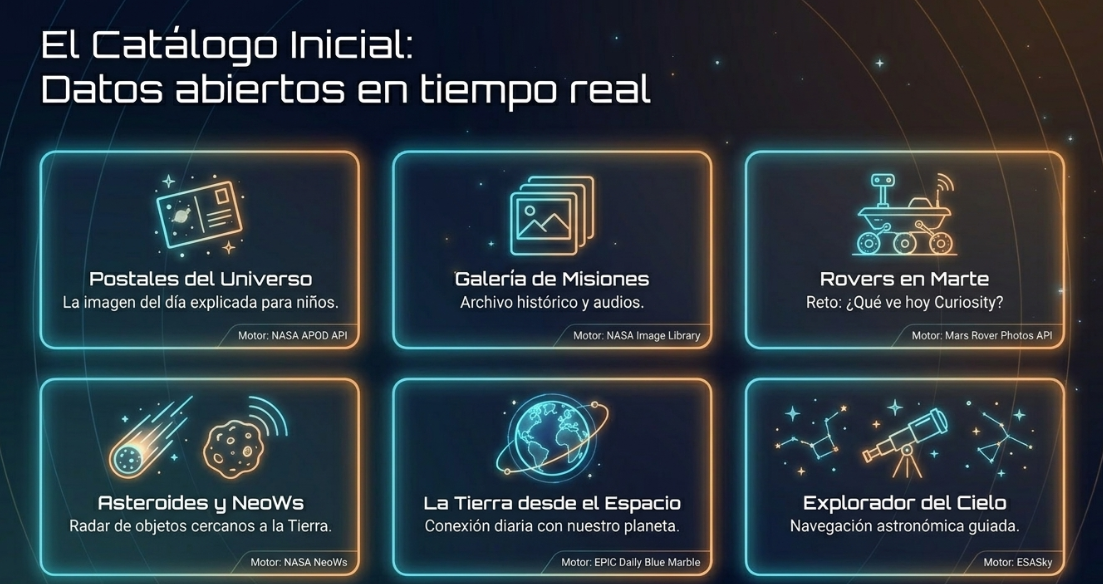
Educational proposals draw on real space missions and are adapted to encourage curiosity, conversation and participation.
Challenges featuring Perseverance, Astrobee, the European Robotic Arm and Rosalind Franklin.
Real images from Jezero crater, Webb, Hubble, Solar Orbiter and Rosetta to observe, play and learn.
Europa Clipper, Proba-3, Hera, Euclid and the dark universe adapted into an accessible experience.
Content cites public sources from NASA, ESA and scientific organisations. Educational use does not imply sponsorship or official collaboration.
Modular platform
Universe is conceived as a platform open to new content, while every module must respect its educational purpose, privacy requirements and academic review.
Predictions of International Space Station passes and activities for observing the sky from each hospital.
Astronomy, space exploration, robotics and science communication adapted to different ages.
International map, QR/NFC identity and future supervised interactions between Mini R2-KT units.
Universities and organisations will be able to contribute educational content related to their expertise.
These capabilities already exist in a functional prototype and remain under technical, academic and legal assessment before final implementation.
The unit sends a technical identifier; it requires no name, diagnosis or medical history.
APOD, missions, rovers, Earth observation, asteroids and guided sky exploration from open sources.
Units appear by city or institution, with shared missions and structured interactions rather than open chat.
Sources, licences, credits and restrictions are reviewed before a resource reaches the children's experience.
The future production version must complete all applicable privacy, security, accessibility and licensing reviews. References to NASA or ESA describe content sources and do not imply sponsorship.
Learning in a real context
The visit to Hospital Universitario Fundación Alcorcón, accompanied by Health Sciences volunteers from Universidad Rey Juan Carlos, provides learning in the hospital environment to improve protocols, interaction and the different phases of the project.
This work is part of an academic partnership under development. The protocol is still being designed and may examine emotional experience, anxiety, pain perception, families, professionals and selected procedures, always with the corresponding ethical and healthcare authorisations.
Signed agreement · URJC
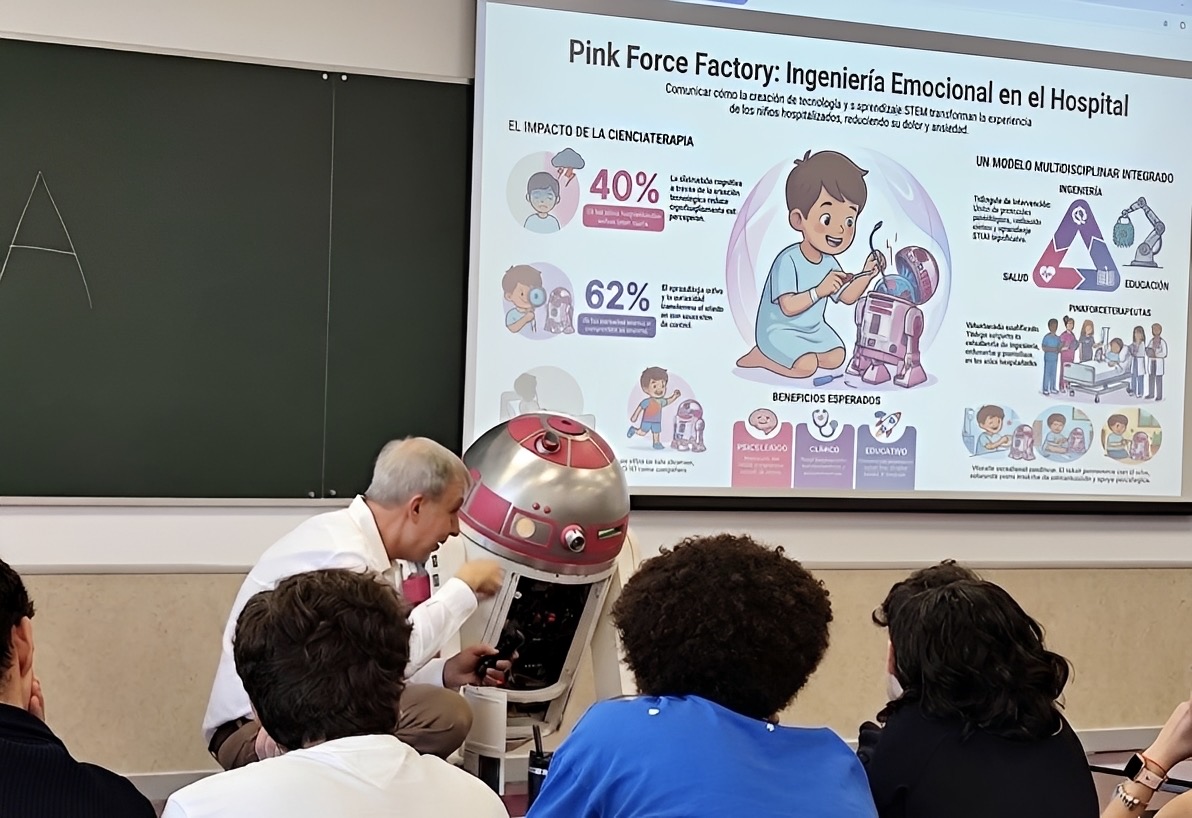
R2-KT and The Pink Force Factory took part on 29 June 2026 in the “DolorES nombre de MUJER” summer course organised by Universidad Rey Juan Carlos in Aranjuez. The event presented the project from an interdisciplinary perspective and explored its educational, psychological and social dimensions.
The signed URJC agreement frames joint work to improve visit protocols, interaction with children and the future assessment of the hospital-support model. The partnership is active; outcome evaluation remains under development and does not yet constitute completed clinical validation.
A shared model
Spain is the hub from which the project grows internationally through partnership agreements.
Purpose, governance and hospital relationships
Engineering, research, validation and mentoring
Technical coordination between foundation, industry and academia
Funding, talent, materials and technological capacity
Mentored STEAM learning from age 12
Supervised use in pediatric oncology and classrooms
Shared engineering
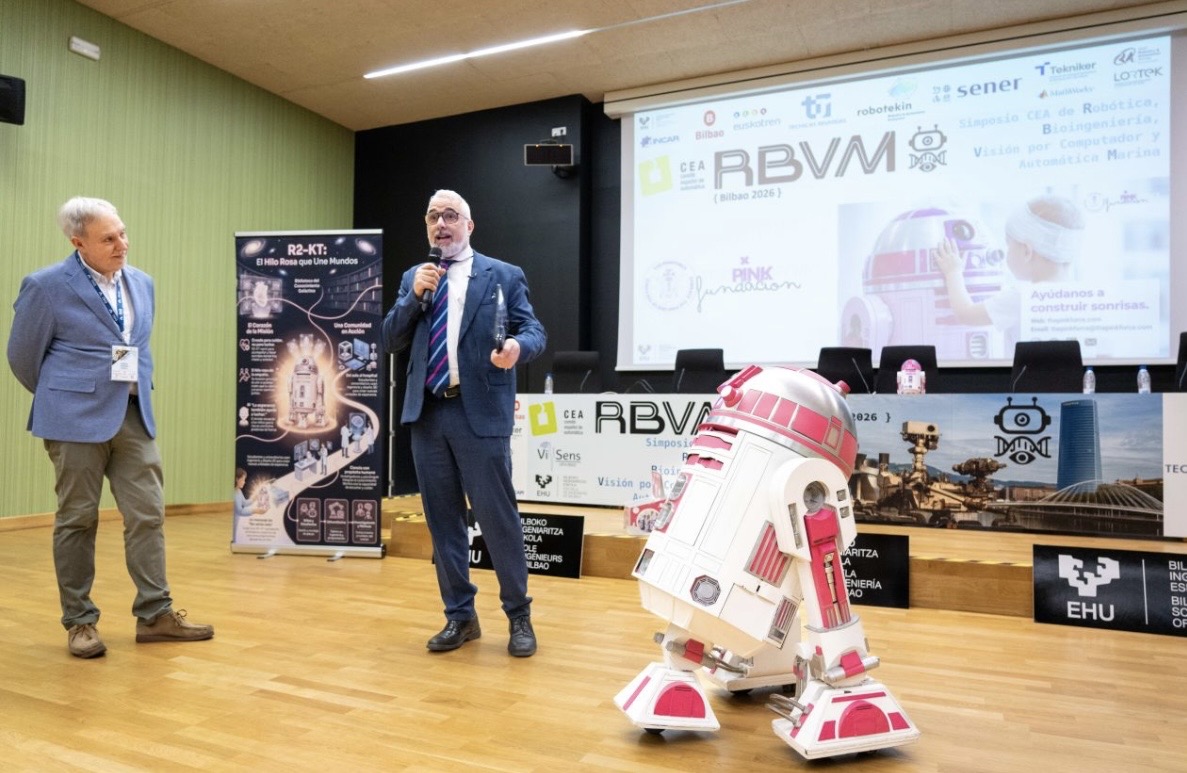
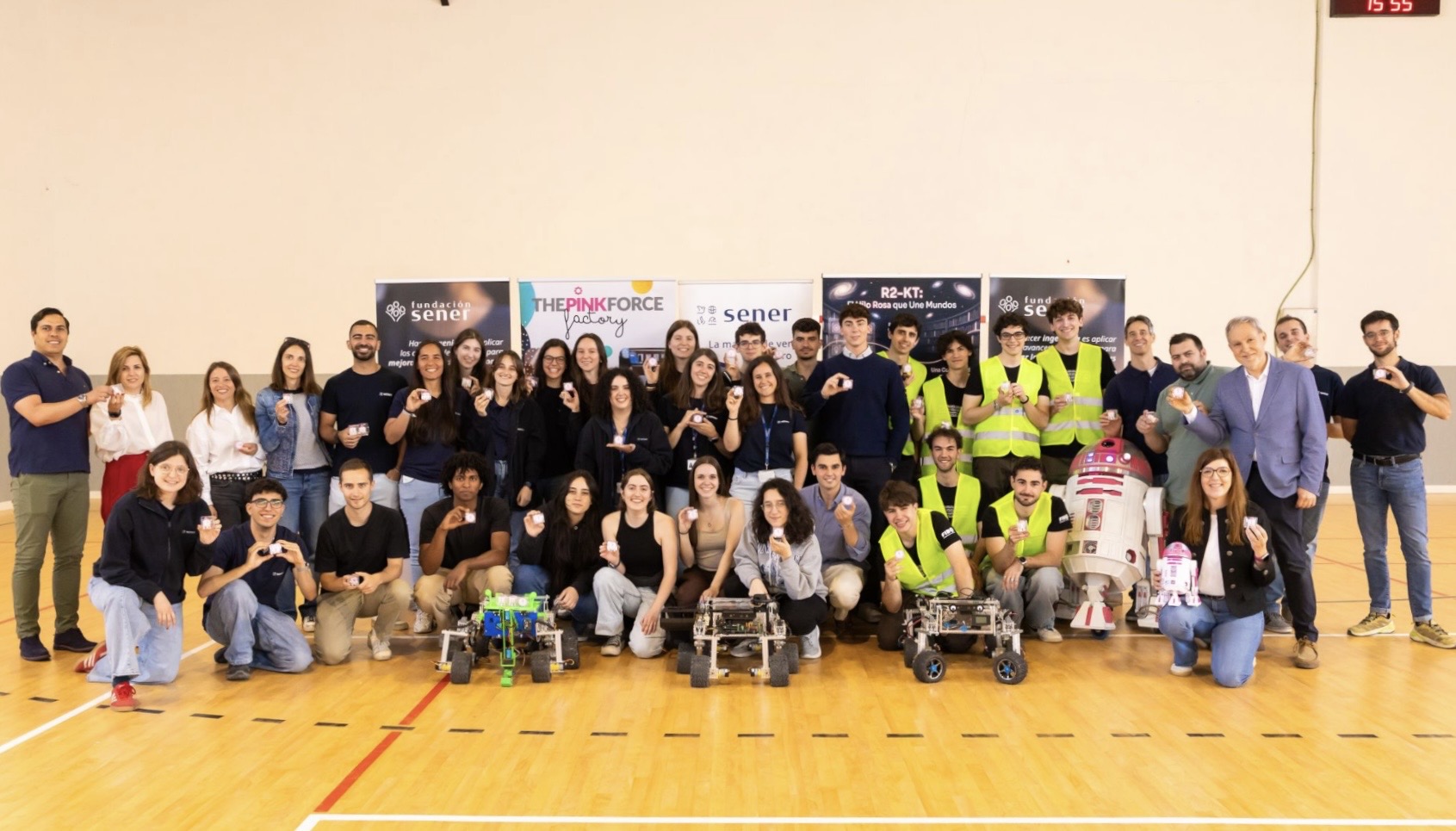
SENER Foundation is promoting the construction of the full-size aluminium R2-KT master unit, conceived to test functions and transfer knowledge to universities. CEA coordinates technical work between the Foundation, companies and the university community.
Together, these capabilities turn a solidarity initiative into a collaborative, documented and replicable technical model.
Model safeguards
Partnership agreements turn prudence into a shared procedure for the Foundation, universities, companies and recipient centres.
I Pink Force STEAM Challenge 2027
University teams from across Spain will take on a human-centred IoT challenge: enabling a greeting sent from a Mini R2-KT in Spain to reach another unit in Japan, translated and transformed into a visible interaction.
The challenge
Teams will design a communication architecture capable of connecting two Mini R2-KT units through the cloud. The challenge combines electronics, programming, connectivity, translation and interaction design, with safety and responsible-use criteria for hospital environments.
The challenge, its mission and participation pathway will be presented with Albin Johnson.
University teams will prepare and submit their technical solution before the finalists are selected.
The finalist teams will build and demonstrate their proposals at Campus Puente Nuevo.
The winning project will culminate in a delivery mission and an international connection with the Children’s Cancer Association of Japan.
Registration and the rules have not yet been published. You can register your interest now and receive information as each participation route opens.
University + STEAM
Universities contribute engineering, research, mentoring and validation. With suitable support, schools can participate in 3D printing, assembly, electronics, programming and content development from age 12.
27 November 2026 · Naturgy’s Puente Nuevo Campus
Signed agreements
Tecnun–Universidad de Navarra, Universidad de Alcalá, Universidad Francisco de Vitoria, Universidad Rey Juan Carlos and EHU–Bilbao School of Engineering collaborate with Fundación ThePinkForce through formal agreements.
Institutional approval · signature imminent
Fundación ThePinkForce presented The Pink Force Factory model and its work in social robotics, STEAM education and hospital partnerships at Universidad Europea de Madrid.
The University has formally approved the project and both organisations are preparing to sign the collaboration agreement. The next step will define training, research and purpose-led innovation programmes.
Propose a university partnershipInterdisciplinary innovation
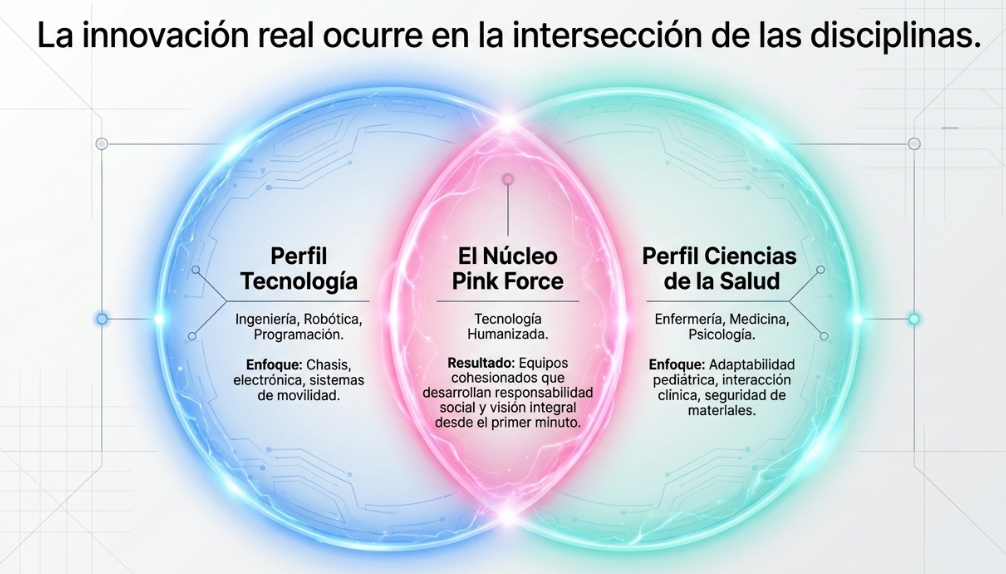
Engineering, robotics, electronics, systems and mobility.
Cohesive teams, ethics, social responsibility and a holistic vision.
Nursing, medicine, psychology, safety and pediatric interaction.
Academic and healthcare assessment remains under development; this model describes collaboration and does not yet demonstrate clinical effectiveness.
Female STEAM talent
During a Technovation Girls intermediate round, R2-KT visited the BBVA data centre and joined a robotics workshop for the participating girls.
The activity was developed with Power to Code, an association that has a collaboration agreement with Fundación ThePinkForce. It shows how technology, volunteering and female role models can inspire STEM vocations from an early age.
Universities in action
The universities' own publications explain the specific role of each partnership.
Students from several engineering disciplines work on new units, electronics, communication and future autonomous navigation.
View institutional sourceUndergraduate and master's students develop replicas with screens, interaction and technical improvements for hospital support.
View institutional sourceThe partnership opens work on autonomy and interaction and has also mobilised solidarity initiatives across the university community.
View institutional sourceThe School of Engineering brings code, 3D models, diagrams and inventories into a socially meaningful learning experience.
View institutional sourceDesigning the assessment and learning model for hospital settings, without yet claiming clinical effectiveness.
Scientific volunteering, workshops and construction of units delivered to Hospital Universitario La Paz.
Real milestones
The first 2025 experiences guided the redesign and university model for the next phase.
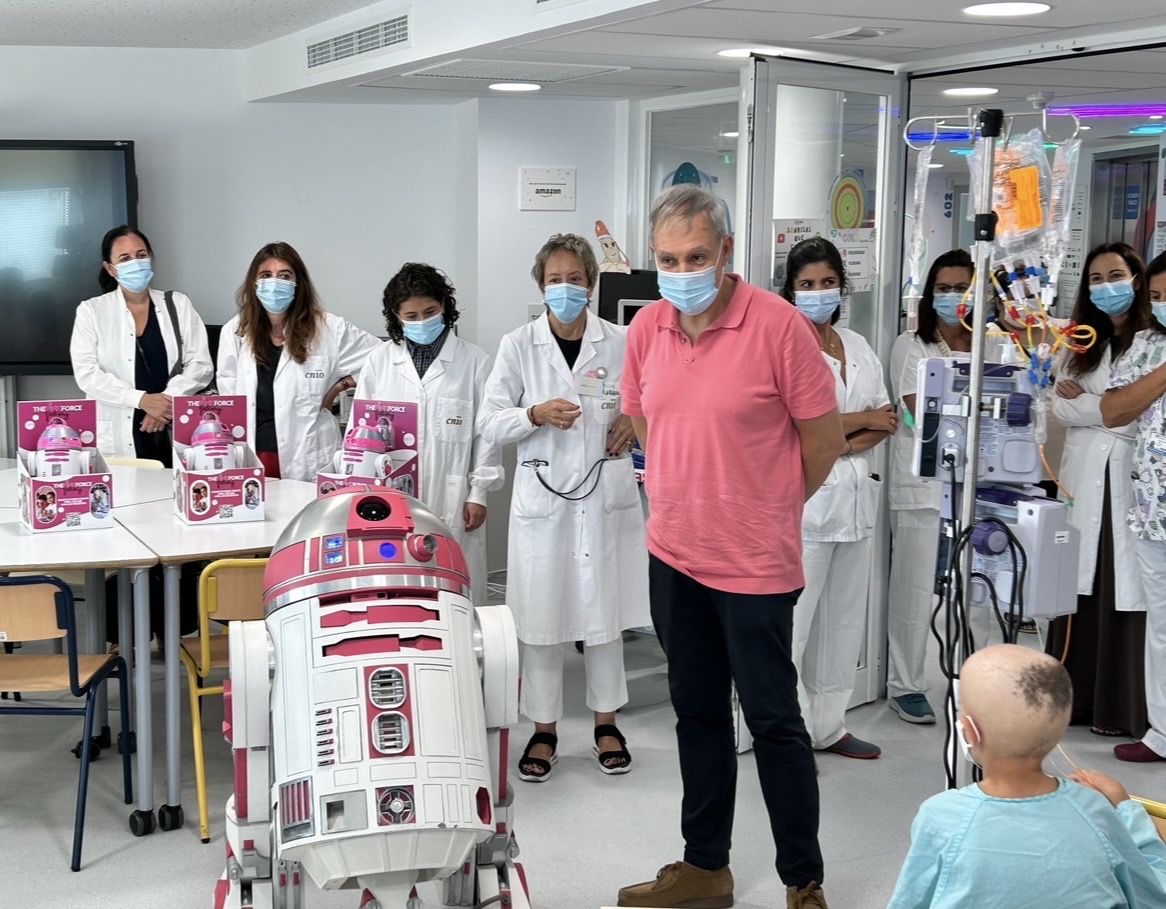
Built by volunteer CNIO researchers and delivered together with the Foundation.
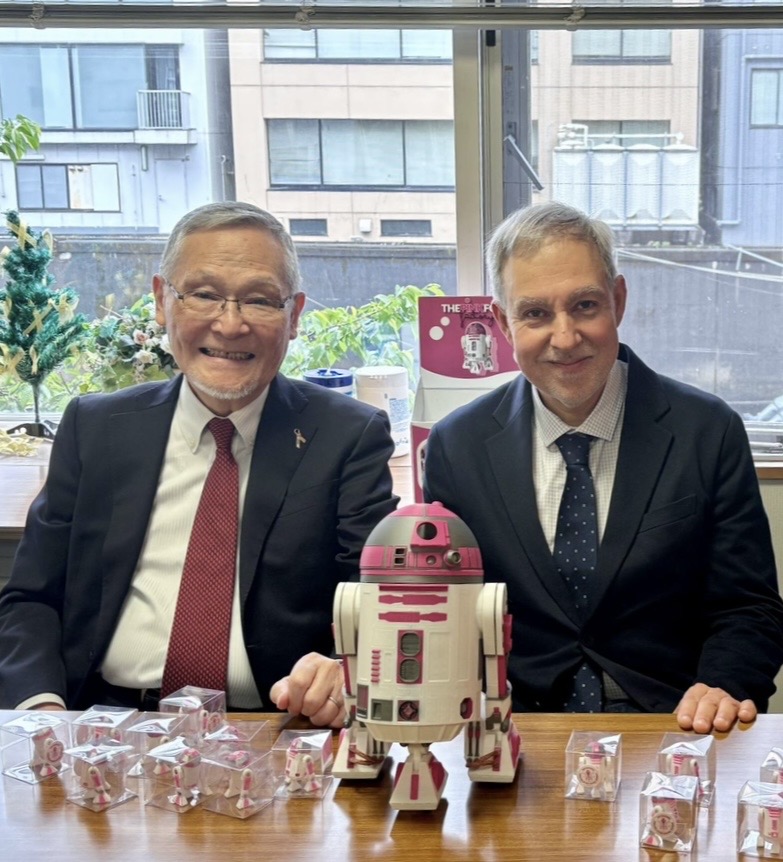
Delivered with support from Bilbao City Council's Innovation Department and La Cuadri del Hospi.
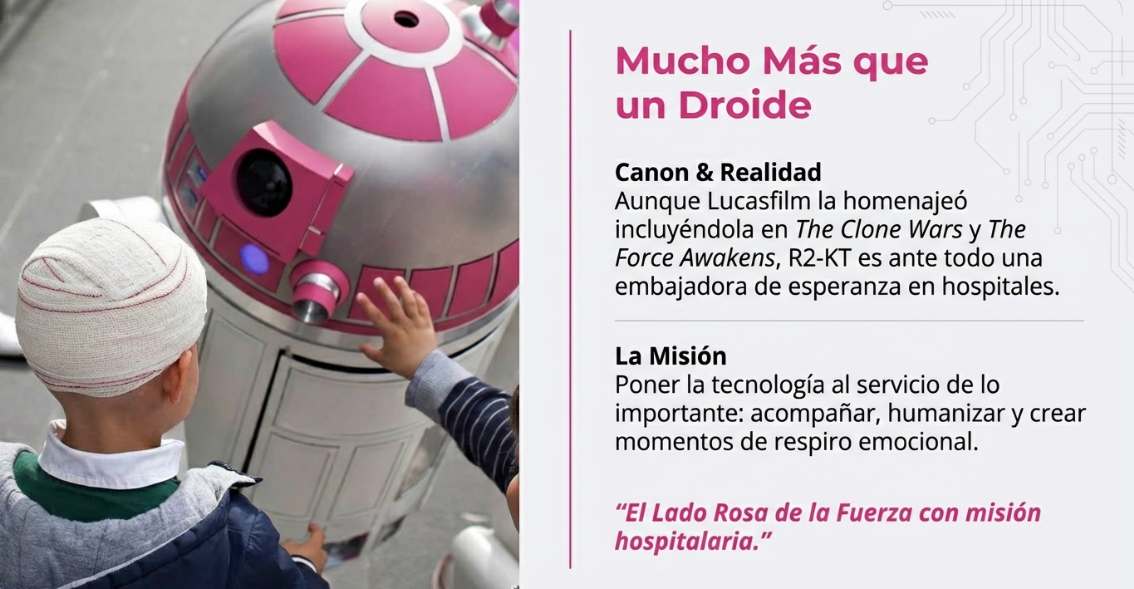
The project in images
A documentary selection of the work connecting hospitals, research, universities and companies.
Institutional patronage
We seek more than funding: we seek allies who contribute knowledge, credibility, talent and capacity to scale.
Hospitals, Challenge, Universe, validation or international expansion.
Explore this partnershipEngineering, AI, cloud, IoT, cybersecurity, manufacturing, components or mentoring.
Explore this partnershipFive or more Mini R2-KT units, materials, workshops, delivery and impact report.
Explore this partnershipEach partnership is defined through a specific agreement covering scope, commitments, communication and impact reporting.
Let's talk
Tell us how you would like to contribute. Our team will reply from the Foundation and help define the right path.
thepinkforce@thepinkforce.comInstitutional contact and forms channel